

Medicine Program
ORIENTAL


New York College of Health Professions is honored to announce the newly acquired Accreditation from the New England Commission of Higher Education (NECHE).
New York College of Health Professions is honored to announce the newly acquired Accreditation from the New England Commission of Higher Education (NECHE).
New York College of Health Professions is honored to announce the newly acquired Accreditation from the New England Commission of Higher Education (NECHE).
New York College of Health Professions is honored to announce the newly acquired Accreditation from the New England Commission of Higher Education (NECHE).
New York College of Health Professions is honored to announce the newly acquired Accreditation from the New England Commission of Higher Education (NECHE). New York College of Health Professions is honored to announce the newly acquired Accreditation from the New England Commission of Higher Education (NECHE). New York College of Health Professions is honored to announce the newly acquired Accreditation from the New England Commission of Higher Education (NECHE). New York College of Health Professions is honored to announce the newly acquired Accreditation from the New England Commission of Higher Education (NECHE).
Good News:

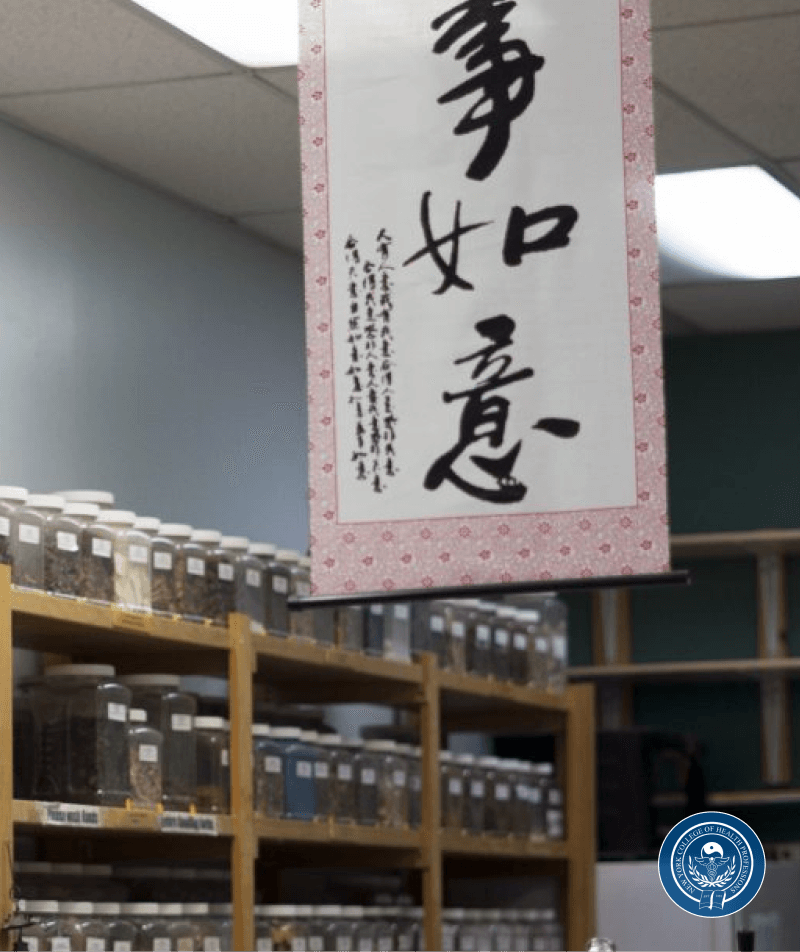
Oriental Medicine Program
New York College of Health Professions Graduate School of Oriental Medicine offers a 185 credit, ten trimester, program in Oriental Medicine. Students graduate with a Bachelor of Professional Studies/ Master of Science degree in Health Sciences/ Oriental Medicine. The Oriental Medicine program was the first in New York to be approved by the State Education Department and is accredited by the Accreditation Commission for Acupuncture and Herbal Medicine (ACAHM), the recognized accrediting agency for the approval of programs preparing Oriental Medicine practitioners.
The Oriental Medicine curriculum provides for the close integration of courses in Acupuncture and Herbal Medicine. Student practitioners learn early in their studies the most effective way to combine these modalities and provide patients with the best treatment for their condition. In keeping with the College’s philosophy of integrating Holistic and Western medicine, the curriculum also includes courses in Asian Bodywork and Traditional Chinese Medicine, as well as Western bioscience and clinical sciences, pharmacology, Western and Eastern nutrition and holistic techniques and methods.
Oriental Medicine combines Acupuncture and Herbal Medicine to treat a patient’s illnesses as well as to maintain optimum health. The program is rooted in the principles of Traditional Chinese Medicine, which facilitates the body’s natural healing processes.
Students in this program will be prepared for careers as licensed Acupuncturists while gaining the knowledge necessary to integrate herbal remedies with Acupuncture for a truly holistic practice.
Required training in T’ai Chi Chuan, Qi Gong or Yoga helps Oriental Medicine students better understand how their bodies function, thereby enhancing their ability to diagnose and treat their patients.
Program Purpose Statement
The purpose of the Graduate School of Oriental Medicine program is to provide a comprehensive education and training in Acupuncture and/or Oriental Medicine through the Bachelor of Professional Studies in Health Science and Master of Science in Acupuncture or Oriental Medicine (BPS/MS). The program strives to graduate practitioners who can become an integral part of the health care community.
Program Goals
The goals of the Graduate School of Oriental Medicine program are to:
Provide students with the knowledge, skills and professionalism to become highly qualified practitioners in acupuncture and/or oriental Medicine.
Prepare students to be capable of passing the licensure and/or certification exams required to become a licensed or certified practitioner in New York and other states.
Develop in students a sense of ethical responsibility in the therapist-client dynamic and with fellow practitioners.
Provide students with an appreciation for continued learning throughout their professional careers.
Enable students to be fully capable and independent practitioners and obtain employment in various health care fields.

Student Learning Outcome for the Graduate School of Oriental Medicine Program
Upon successful completion of the Graduate School of Oriental Medicine Program, students will be able to:
Conduct a holistic and thorough assessment of the patient’s condition by employing differential diagnosis and critical thinking utilizing four methods of diagnosis of Traditional Chinese Medicine (TCM).
Develop personalized, effective, and safe treatment plans according to the principles of TCM.
Acupuncture program: Implementing acupuncture treatments and range of adjunctive therapies such as: moxibustion, cupping, electroacupuncture, GuaSha, TuiNa, etc.
Oriental Medicine program: Incorporating Chinese herbal medicine in conjunction with all treatments outlined in the Acupuncture program.
Emphasize the importance of self-care and preventative care through physical arts, diet, and lifestyle.
Maintain comprehensive documentations and ethically and professionally communicate with patients and other health care providers with a thorough TCM and biomedical knowledge.
Design strategies for establishing a successful practice, business, or employment within the diverse field of acupuncture.
Oriental Medicine Program Courses of Study
The 185-credit recommended course of study for the Oriental Medicine Program, with electives, outlined below is designed to be completed in 10 trimesters (4 academic years). For students who must work at a full-time or part time jobs while in attendance or have other responsibilities outside of school, students may attend New York College as part-time students. Part time students must complete their course study of the Oriental Medicine program within the maximum of 8 academic years.
Note: The following 3 courses (total of 11 credits) are prerequisite courses to the program. These credits do not apply towards the Oriental Medicine (BPS/MS) program’s 185 required credits for completion of the program.
HS 301 Anatomy & Physiology 1 (4 Credits)
HS 302 Anatomy & Physiology 2 (4 Credits)
HS 310 Chemistry (3 Credits)
ACUPUNCTURE WITH A CHINESE HERBAL MEDICINE SPECIALIZATION PROGRAM (BPS/MS)
10 Trimesters | 185 Credits | 3,495 Hours
| Year | Trimester | Course Code | Course Title | Credits | Hours |
|---|---|---|---|---|---|
| Year 1 | Trimester 1 | HS 300 | Surface Anatomy (UL) | 4 | 75 |
| OS 301 | Fundamental Theory of Oriental Medicine (UL) | 3 | 45 | ||
| AC 301 | Channels and Points I (UL) | 4 | 75 | ||
| CH 301 | Introduction to Chinese Herbal Medicine | 2 | 30 | ||
| PA 300 | Introduction to Physical Arts | 1 | 30 | ||
| HS 301 | Anatomy and Physiology I (if necessary) | 4 | 75 | ||
| HS 310 | Chemistry for the Health Sciences (if necessary) | 3 | 45 | ||
| Trimester 2 | HS 303 | Neurology (U) | 3 | 45 | |
| OS 302 | OM Diagnostic Methods | 3 | 45 | ||
| OS 304 | OM Pattern ID, Pathomechanisms & Treatment Principles I (UL) | 3 | 45 | ||
| AC 302 | Channels and Points II | 4 | 75 | ||
| AT 401 | Asian Bodywork I (Tui Na) (U) | 2 | 45 | ||
| PA 301/311/321 | Tai Chi I / Yoga I / Qi Gong I (U) | 1 | 30 | ||
| CH 302 | Chinese Materia Medica I (U) | 3 | 45 | ||
| HS 302 | Anatomy and Physiology II (if necessary) | 4 | 75 | ||
| Trimester 3 | HS 304 | Biochemistry (UL) | 3 | 45 | |
| HS 305 | Pathophysiology I (G) | 3 | 45 | ||
| OS 305 | OM Pattern ID, Pathomechanisms & Treatment Principles II (UL) | 3 | 45 | ||
| AC 303 | Channels and Points III (UL) | 4 | 75 | ||
| AC 304 | OM Palpatory Assessment (UL) | 2 | 45 | ||
| AT 402 | Asian Bodywork II (Tui Na II) (UL) | 2 | 45 | ||
| PA 302/312/322 | Tai Chi II / Yoga II / Qi Gong II (U) | 1 | 30 | ||
| CH 303 | Chinese Materia Medica II (U) | 3 | 45 | ||
| Year 2 | Trimester 4 | HS 405 | Pathophysiology II (G) | 3 | 45 |
| HS 402 | Western Nutrition (U) | 3 | 45 | ||
| OS 406 | TCM Internal Medicine I (UL) | 3 | 45 | ||
| AC 400 | Acupuncture Points Review (U) | 2 | 45 | ||
| AC 411 | Acupuncture Techniques I (G) | 2 | 45 | ||
| PA 303/313/323 | Tai Chi III / Yoga III / Qi Gong III (U) | 1 | 30 | ||
| C 301 | Introduction to Clinic (G) | 2 | 45 | ||
| C 401 | Clinic Grand Rounds I (G) | 2 | 45 | ||
| CH 401 | Chinese Materia Medica III (U) | 3 | 45 | ||
| Trimester 5 | HS 401 | Medical Microbiology & Immunology (G) | 3 | 45 | |
| HS 403 | Patient Assessment I (G) | 4 | 75 | ||
| OS 407 | TCM Internal Medicine II (G) | 3 | 45 | ||
| AC 412 | Acupuncture Techniques II & New Methods (G) | 2 | 45 | ||
| HS 406 | Health Psychology (U) | 3 | 45 | ||
| C 402 | Clinic Grand Rounds II (G) | 2 | 45 | ||
| CH 402 | Chinese Herbal Formulas I (U) | 3 | 45 | ||
| Trimester 6 | HS 404 | Patient Assessment II (G) | 4 | 75 | |
| HS 407 | Medical Ethics (UL) | 2 | 30 | ||
| OS 408 | TCM Gynecology & Male Reproductive Disorders (UL) | 3 | 45 | ||
| OS 405 | Eastern Nutrition (G) | 2 | 30 | ||
| C 302 | Clinical Skills Review (G) | 1 | 30 | ||
| AC 413 | Acupuncture Techniques III (Microsystems) (G) | 2 | 45 | ||
| C 403 | Clinic Assistantship (G) | 3 | 90 | ||
| CH 403 | Herbal Formulas II (U) | 3 | 45 | ||
| Clinic Entrance Exam | — | Clinic Entrance Exam | — | — | |
| Year 3 | Trimester 7 | HS 501 | Internal Medicine I (G) | 3 | 45 |
| HS 503 | Pharmacology (G) | 3 | 45 | ||
| C 501 | Oriental Medicine Clinic I (G) | 6 | 180 | ||
| C 511 | Clinical Analysis & Case Histories I | 2 | 30 | ||
| CH 501 | Herbal Formulas III (U) | 3 | 45 | ||
| Trimester 8 | HS 502 | Internal Medicine II (G) | 3 | 45 | |
| R 511 | Research Data & Methodology (G) | 3 | 45 | ||
| C 502 | Oriental Medicine Clinic II (G) | 6 | 180 | ||
| C 512 | Clinical Analysis & Case Histories II | 2 | 30 | ||
| CH 504 | Shuang Han Lun (G) | 3 | 45 | ||
| CH 502 | Clinical Application of Herbs I (G) | 3 | 45 | ||
| Trimester 9 | M301 | Practice Management (G) | 2 | 30 | |
| C 503 | Oriental Medicine Clinic III (G) | 6 | 180 | ||
| C 513 | Clinical Analysis & Case Histories III | 2 | 30 | ||
| — | Elective (G) | 3 | 45 | ||
| CH 503 | Clinical Application of Herbs II (G) | 3 | 45 | ||
| Year 4 | Trimester 10 | HS 601 | Pharmacognosy & Toxicology (G) | 3 | 45 |
| CH 601 | Clinical Applications of Herbs III (G) | 3 | 45 | ||
| CH 602 | Wen Bing Xue (G) | 3 | 45 | ||
| C 504 | Oriental Medicine Clinic IV (G) | 6 | 180 | ||
| C 514 | Clinical Analysis and Case Histories IV (G) | 2 | 30 | ||
| Clinic Exit Exam | — | Clinic Exit Exam | — | — |
Notes:
- Prerequisites:
- HS 301 & HS 302 must be completed by end of Year 1 to continue.
- HS 310 must be completed before HS 304 (Biochemistry).
- Credits for HS 301, HS 302, and HS 310 do not count toward the 185 required credits.
Accelerated Program for Returning MS in Acupuncture Graduates
6 Trimesters | 47 Credits | 840 Hours
| Year | Trimester | Course Code | Course Title | Credits | Hours |
|---|---|---|---|---|---|
| Year 1 | Trimester 1 | CH 302 | Chinese Materia Medica I (U) | 3 | 45 |
| CH 303 | Chinese Materia Medica II (U) | 3 | 45 | ||
| Trimester 2 | CH 401 | Chinese Materia Medica III (U) | 3 | 45 | |
| CH 402 | Chinese Herbal Formulas I (U) | 3 | 45 | ||
| Trimester 3 | CH 403 | Herbal Formulas II (U) | 3 | 45 | |
| CH 501 | Herbal Formulas III (U) | 3 | 45 | ||
| Year 2 | Trimester 4 | CH 502 | Clinical Application of Herbs I (G) | 3 | 45 |
| HS 601 | Pharmacognosy & Toxicology (G) | 3 | 45 | ||
| C 521 | Herbal Clinic I | 3 | 90 | ||
| Trimester 5 | CH 503 | Clinical Application of Herbs II (G) | 3 | 45 | |
| CH 504 | Shuang Han Lun (G) | 3 | 45 | ||
| C 522 | Herbal Clinic II | 3 | 90 | ||
| Trimester 6 | CH 601 | Clinical Applications of Herbs III (G) | 3 | 45 | |
| CH 602 | Wen Bing Xue (G) | 3 | 45 | ||
| C 514 | Clinical Analysis & Case Histories IV (G) | 2 | 30 | ||
| C 523 | Herbal Clinic III | 3 | 90 |
Notes:
- Designed for students who already hold an MS in Acupuncture.
- All courses marked (U) = Upper division; (G) = Graduate level.
- Total credits: 47
- Total clinical hours: 840 (including 270 hours in herbal clinics)
Tuition & Scholarships
New York College of Health Professions is committed to providing students in our Graduate School of Oriental Medicine with all necessary means to assist them in succeeding in school and in their goal of becoming holistic practitioners. We offer Scholarships for all qualified students. All students are provided with the option of installment plans to help with tuition payments.
Clinical Education
Clinic Training in OM Program
Each student should be trained in Introduction to Clinic, Clinic skill review; in Ground Round 1 & 2 for Clinic Observation; Clinic Assistantship; 4 Internships with 4 Clinic Cases histories so that Each Oriental Medicine student will spend more than 1000 hours supervised in our academic health care teaching clinics. There they will talk with patients about their concerns, work with faculty to assess and treat illness with acupuncture and herbal medicine and educate patients on making healthy lifestyle choices.
Faculty
One of the major benefits of our Graduate School of Oriental Medicine is our faculty, many of whom were trained in China, as well as the United States and Europe. Faculty members are actively engaged in practice, have research experience, and are eager to share their knowledge with students to bring out each student’s full potential.
Disclosure of State Requirement for Acupuncture License
Completion of the current Acupuncture and/or Oriental Medicine program meets the educational requirements for professional licensure or certification needed for employment is detailed in the Disclosure of State Requirement for Acupuncture License. Additional details can be found on NCCAOM’s State Licensure Requirements website and by clicking on each state to see the details and procedures of applying for licensure or certification.
Licensing & National Certification
The New York College of Health Professions Oriental Medicine Program requirements exceed the certification and licensing requirements set forth by the appropriate regulatory bodies. Graduates of this program are well prepared for NCCAOM national certification exams in both Acupuncture and Chinese Herbal Medicine which is required by New York State for Licensure in Acupuncture. With efforts to implement state licensing for Herbalists gaining momentum, graduates of this program will enjoy a distinct advantage in being prepared for the required exams that licensure will entail.

Academic Information for NYCHP Students
NYCHP Publications
To learn about our programs, course descriptions, academic policies, and more, click here.