Program

Acupuncture

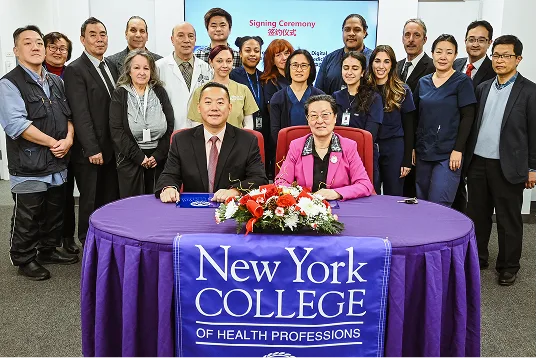
New York College of Health Professions is honored to announce the newly acquired Accreditation from the New England Commission of Higher Education (NECHE).

New York College of Health Professions is honored to announce the newly acquired Accreditation from the New England Commission of Higher Education (NECHE).

New York College of Health Professions is honored to announce the newly acquired Accreditation from the New England Commission of Higher Education (NECHE).

New York College of Health Professions is honored to announce the newly acquired Accreditation from the New England Commission of Higher Education (NECHE).

New York College of Health Professions is honored to announce the newly acquired Accreditation from the New England Commission of Higher Education (NECHE). New York College of Health Professions is honored to announce the newly acquired Accreditation from the New England Commission of Higher Education (NECHE). New York College of Health Professions is honored to announce the newly acquired Accreditation from the New England Commission of Higher Education (NECHE). New York College of Health Professions is honored to announce the newly acquired Accreditation from the New England Commission of Higher Education (NECHE).

Good News:

Graduate School of Acupuncture and Herbal Medicine — Acupuncture Program

Program Overview

New York College of Health Professions' Graduate School of Acupuncture and Herbal Medicine offers a 145-credit, 9-trimester Acupuncture Program. Upon completion, graduates receive a combined Bachelor of Professional Studies in Health Science / Master of Science in Acupuncture (BPS/MS) degree.

This program was the first acupuncture program in New York State to be approved by the New York State Education Department and is accredited by the Accreditation Commission for Acupuncture and Herbal Medicine (ACAHM), the recognized accrediting agency for programs preparing acupuncture practitioners. Graduates are eligible to sit for the board examinations administered by the National Certification Board for Acupuncture and Herbal Medicine (NCBAHM)(formerly NCCAOM, renamed effective January 2, 2026).

Graduates from the Acupuncture program are qualified to take the following NCBAHM examinations:

  • Acupuncture with Point Location

  • Foundations of Oriental Medicine

  • Biomedicine

About Acupuncture

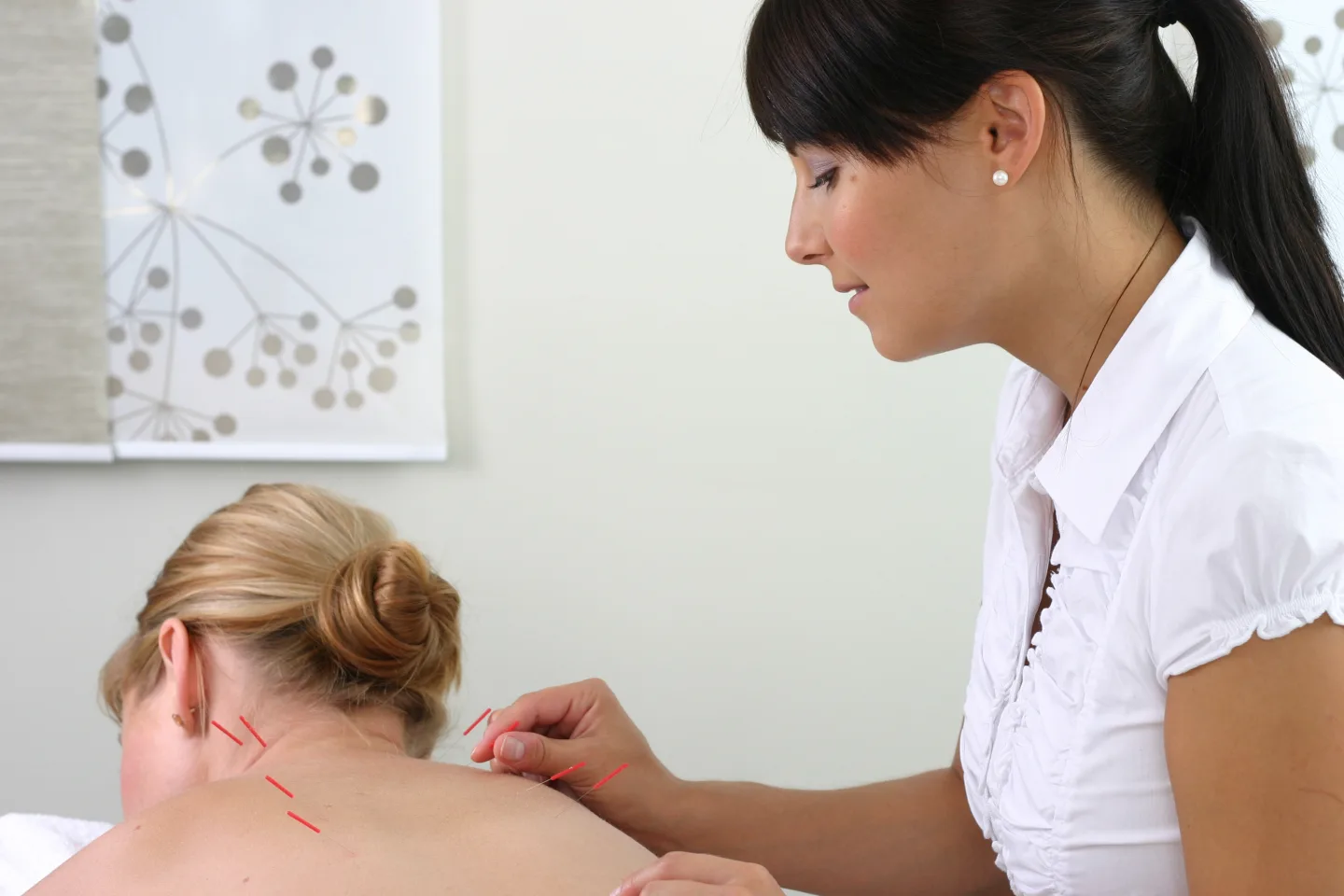
Acupuncture is an ancient Chinese healing art centered on healing, energy, and balance. It employs the insertion of fine needles into specific points on the body to manipulate the flow of qi (energy) and restore the body's equilibrium. An essentially painless technique, acupuncture is widely used to treat illness, manage pain, and maintain good health.

Curriculum

In keeping with our philosophy of integrating holistic and Western medicine, the Acupuncture program curriculum includes:

  • Traditional Chinese Medicine (TCM): Asian Bodywork (Tui Na), Herbalism fundamentals, TCM diagnostic methods, pattern identification, and internal medicine

  • Western Biomedical Sciences: Anatomy & Physiology, Biochemistry, Pathophysiology, Neurology, Microbiology & Immunology, Internal Medicine, and Pharmacology

  • Nutrition: Both Western and Eastern dietary therapy

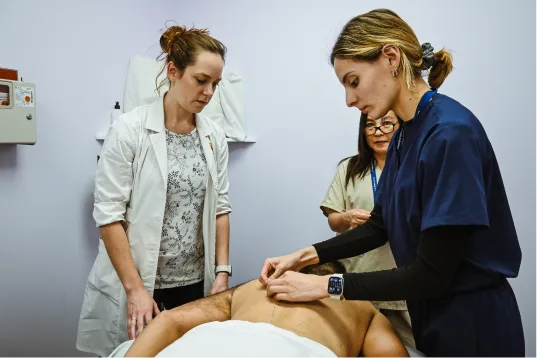
  • Acupuncture Techniques: Needling methods, moxibustion, cupping, electroacupuncture, gua sha, microsystems (auricular and scalp acupuncture), and Japanese acupuncture

  • Professional Development: Practice Management, Professional and Medical Ethics

  • Physical Arts: Required training in Tai Chi Chuan, Qi Gong, or Yoga — helping students better understand how their bodies function and enhancing their ability to diagnose and treat patients

  • Research: Research Data & Methodology

Acupuncture Program

Program Purpose Statement

The purpose of the Graduate School of Acupuncture and Herbal Medicine program is to provide a comprehensive education and training in Acupuncture through the Bachelor of Professional Studies in Health Science and Master of Science in Acupuncture (BPS/MS). The program strives to graduate practitioners who can become an integral part of the health care community.

Program Goals

The goals of the Graduate School of Acupuncture and Herbal Medicine program are to:

  • Provide students with the knowledge, skills, and professionalism to become highly qualified practitioners in acupuncture

  • Prepare students to be capable of passing the licensure or certification exams required to become a licensed or certified practitioner in New York and other states

  • Develop in students a sense of ethical responsibility in the therapist-client dynamic and with fellow practitioners

  • Provide students with an appreciation for continued learning throughout their professional careers

  • Enable students to be fully capable and independent practitioners and obtain employment in various health care fields

Student Learning Outcomes

Upon successful completion of the Graduate School of Acupuncture and Herbal Medicine Acupuncture Program, students will be able to:

  • Conduct a holistic and thorough assessment of the patient's condition by employing differential diagnosis and critical thinking utilizing the four methods of diagnosis of Traditional Chinese Medicine (TCM)

  • Develop personalized, effective, and safe treatment plans according to the principles of TCM

  • Implement acupuncture treatments and a range of adjunctive therapies such as moxibustion, cupping, electroacupuncture, gua sha, tui na, and other modalities

  • Emphasize the importance of self-care and preventative care through physical arts, diet, and lifestyle

  • Maintain comprehensive documentation and ethically and professionally communicate with patients and other health care providers with thorough TCM and biomedical knowledge

  • Design strategies for establishing a successful practice, business, or employment within the diverse field of acupuncture

Acupuncture Program Course of Study

The 145-credit recommended course of study, with electives, is designed to be completed in 9 trimesters (3 academic years) of full-time study. For students who must work full-time or part-time or have other responsibilities outside of school, part-time enrollment is available. Part-time students must complete the Acupuncture program within a maximum of 6 academic years.

Prerequisite Courses

The following three courses (totaling 11 credits) are prerequisites to the program. These credits do not count toward the 145 credits required for the Acupuncture (BPS/MS) degree.

Course Title Credits
HS 301 Anatomy & Physiology I 4
HS 302 Anatomy & Physiology II 4
HS 310 Chemistry for the Health Sciences 3

Acupuncture Law in New York State

Acupuncture has been a licensed profession in the State of New York since 1991. The practice of acupuncture is recognized by the Office of Professions alongside the 50 New York State licensed professions, including medical doctors, chiropractors, and dentists.

Key provisions of New York State acupuncture law (Title 8, Article 160, §8214 of NYS Education Law and 8 NYCRR Parts 52.16 and Subpart 79-2):

  • Licensed acupuncturists are entry-level providers — they may treat patients without first obtaining a medical referral
  • A licensed acupuncturist may treat patients for "diseases, disorders and dysfunctions of the body for the purpose of achieving a therapeutic or prophylactic effect"
  • The licensed acupuncturist is not limited to the treatment of a specific disease condition nor confined to a specific body part
  • A licensed acupuncturist must advise patients of the importance of medical consultation regarding their condition
  • A licensed acupuncturist must maintain a signed patient attestation form in the patient record, as required by Article 160, NYS Education Law. The law affords the practitioner a broad scope of practice, consistent with the holistic perspective promoted by the Graduate School of Acupuncture and Herbal Medicine.

New York State Licensure Requirements

To qualify for an acupuncture license in New York State, an applicant must:

  • Complete and file an application with the New York State Education Department
  • Provide evidence of satisfactory completion of a registered course of formal study (i.e., New York College of Health Professions Acupuncture program) or its substantial equivalent
  • Have experience in accordance with the Commissioner's regulations
  • Pass examination(s) satisfactory to the NYS Board (i.e., NCBAHM exams)
  • Pass the Clean Needle Technique (CNT) Examination
  • Be at least 21 years of age
  • Be of good moral character as determined by NYSED
  • Have earned nine college credits in the biosciences (automatically satisfied by completing the BPS/MS degree)
    • Note: Per NYSED, biosciences are defined as biological sciences and do not include chemistry or physics. ????HS 310 (Chemistry) does not satisfy this requirement.???
  • Hold current Red Cross or American Heart Association certification in CPR and First Aid
  • Pay a fee of $788 total to NYSED for initial licensure, and $288 for each triennial registration

Licensing and Certification

The Acupuncture program requirements exceed the certification and licensing standards set forth by the appropriate regulatory bodies. Graduates are well prepared for the NCBAHM national certification exams, which are required by New York State for licensure.


Disclosure of State Requirement for Acupuncture License

Completion of the current Acupuncture program meets the educational requirements for professional licensure or certification needed for employment as detailed in the Disclosure of State Requirement for Acupuncture License.

Additional details can be found on NCBAHM's State Licensure Requirements website by clicking on each state to see the details and procedures for applying for licensure or certification.


National Certification Board for Acupuncture & Herbal Medicine (NCBAHM)

The NCBAHM (formerly the National Certification Commission for Acupuncture and Oriental Medicine, or NCCAOM, renamed effective January 2, 2026) was established by the profession to promote nationally recognized standards in Acupuncture and Chinese Herbal Medicine and to ensure public safety.

Key points:

  • NCBAHM certification represents professional recognition of competency
  • Certification does not authorize or license an individual to practice acupuncture or Chinese herbal medicine — licensure and registration are state regulatory functions
  • As of the most recent data, 46 states plus the District of Columbia use NCBAHM examinations as an integral part of their licensure process
  • The manner in which states use the NCBAHM process varies — some states accept NCBAHM certification as the sole educational, training, or examination criteria for licensure, while others have set additional eligibility requirements, including jurisprudence or practical examinations
  • Applicants should check with the appropriate state agency for information on the application of NCBAHM certification and any recent legislation affecting eligibility criteria

NCBAHM Certification Policies

Candidates applying for NCBAHM certification in Acupuncture, Chinese Herbology, and/or Oriental Medicine are required to complete a prescribed set of examination modules to earn the desired credential. Key information:

  • Individuals applying through the formal education route of eligibility must have documentation of the minimum educational requirements as specified by NCBAHM
  • Certification demonstrates competency for licensure recognized by regulatory bodies, third-party payers, the profession, and the public
  • California licensure may require additional training; please see the California Acupuncture Board's educational requirements for details

Contact NCBAHM:

National Certification Board for Acupuncture & Herbal Medicine (NCBAHM) 2025 M Street NW, Suite 800 Washington, DC 20036 Tel: (202) 381-1140 Email: info@ncbahm.org Web: www.ncbahm.org


Clinical Education

Clinical Training Progression

The clinical education component is structured in progressive phases:

  1. Introduction to Clinic (C 301) — Classroom-based preparation covering clinic policy and procedure, clinical behavior and professionalism, patient care, infection control, OSHA, HIPAA, and Clean Needle Technique
  2. Clinic Grand Rounds I & II (C 401, C 402) — Observation of licensed acupuncturists and student interns in practice, with increasing patient interaction including tongue observation, pulse taking, and case discussion
  3. Clinic Assistantship (C 403) — Active participation in patient treatment alongside student interns under supervision, preparing students for the responsibilities of internship
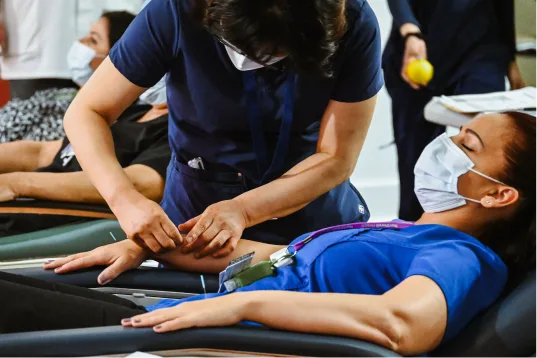
  4. Clinical Internship Series (C 501, C 502, C 503) — The culminating phase of clinical training in which students take full responsibility for patient evaluation and treatment under the supervision of a licensed acupuncturist, including intake, pulse and tongue diagnosis, treatment planning, and administration of acupuncture and adjunctive therapies. Students work in pairs and must complete four clinic shifts per week for 15 weeks (180 hours/trimester) during each internship trimester
  5. Clinical Analysis & Case Histories (C 511, C 512, C 513) — Concurrent coursework supporting the internship experience through case discussion, clinical reasoning, review of traditional and modern case histories, and professional development

Completion of all clinic requirements is required for graduation.


Acupuncture Clean Needle Technique (CNT) Examination

The Council for Colleges of Acupuncture and Herbal Medicine (CCAHM) administers the Clean Needle Technique (CNT) Examination as a requirement for licensure in many states, including New York.

  • The College requires that students achieve a passing grade on the CCAHM CNT exam as a prerequisite for entrance into the acupuncture teaching clinics
  • Students must apply for and pass this exam during the second year of the Acupuncture program
  • The CNT exam demonstrates professionalism and competence in clean needle technique and asepsis prior to undertaking the clinical internship experience

NCBAHM Review Courses

The New York College of Health Professions offers review courses through its Continuing Education Department to help graduates prepare for national certification and licensure examinations:

  • NCBAHM Acupuncture Certification Exam Review — A comprehensive review course covering Acupuncture with Point Location, Foundations of Oriental Medicine, and Biomedicine content areas to prepare candidates for the NCBAHM board examinations
  • Clean Needle Technique (CNT) Examination Review — A preparatory course covering sterile technique, infection control, and safety protocols required for the CCAHM-administered CNT exam, which is a prerequisite for New York State licensure

For schedules, fees, and registration, contact the Continuing Education Department at 1-800-922-7337 ext. 130 or visit www.nycollege.edu.


Useful Contacts

Organization Address Phone Website/Email
NCBAHM (National Certification Board for Acupuncture & Herbal Medicine) 1199 N. Fairfax St., Suite 220, Alexandria, VA 22314 (888) 381-1140 www.ncbahm.org(formerly www.nccaom.org) / info@ncbahm.org
ACAHM (Accreditation Commission for Acupuncture and Herbal Medicine) 500 Lake Street, Suite 204, Excelsior, MN 55331 (952) 212-2434 www.acahm.org / info@acahm.org
CCAHM (Council for Colleges of Acupuncture and Herbal Medicine) 9615 E. County Line Rd., Suite B-584, Centennial, CO 80112 (410) 464-6040 www.ccahm.org / info@ccahm.org
NYS Education Department — Office of the Professions 89 Washington Avenue, 2nd Floor, West Wing, Albany, NY 12234 (518) 474-3817 ext. 260 opunit2@nysed.gov
NYS Education Department — Office of College & University Evaluation 89 Washington Avenue, 5th Floor, Mezzanine, Albany, NY 12234 (518) 474-1551
NECHE (New England Commission of Higher Education) 3 Burlington Woods #100, Burlington, MA 01803 (855) 886-3272 www.neche.org / info@neche.org
New York College of Health Professions 6851 Jericho Turnpike, Suite 210, Syosset, NY 11791 1-800-922-7337 www.nycollege.edu

Disclosure of State Requirement for Acupuncture License

Completion of the current Acupuncture and/or Oriental Medicine program meets the educational requirements for professional licensure or certification needed for employment is detailed in the Disclosure of State Requirement for Acupuncture License.  Additional details can be found on NCCAOM’s State Licensure Requirements website and by clicking on each state to see the details and procedures of applying for licensure or certification. 

Licensing and Certification

The acupuncture program requirements exceed the certification and licensing requirements set forth by the appropriate regulatory bodies.  Graduates of this program are well prepared for the NCCAOM national certification exams which are required by New York State for licensure.

National Certification Commission for Acupuncture & Oriental Medicine (NCCAOM)

The NCCAOM was established by the profession to promote nationally recognized standards in Acupuncture and Oriental Medicine and to ensure public safety. NCCAOM certification represents professional recognition. It does not authorize or license an individual to practice acupuncture or Chinese Herbal Medicine. Licensure and registration are state regulatory functions.

As of 2009, forty-one states plus the District of Columbia use NCCAOM examinations as an integral part of their licensure process.

The manner in which states use the NCCAOM process varies. In some states, NCCAOM certification is the only educational, training or examination criteria for licensure. Other states have set additional eligibility criteria. A small number of states have additional jurisprudence or practical examination requirements. Please check with the appropriate state agency for information on the application of NCCAOM certification and recent legislation which affects eligibility criteria.

NCCAOM Certification Policies

Effective September 13, 2011, individuals applying to take the NCCAOM examinations through the formal education route of eligibility must have documentation of a minimum of the following:

Review Courses

The New York College of Health Professions offers review courses for the NCCAOM exams in both acupuncture and Chinese herbology and for the acupuncture Clean Needle Technique examination through its Continuing Education Department.

Acupuncture Clean Needle Technique Examination

The Council for Colleges of Acupuncture and Oriental Medicine (CCAOM) administers the Clean Needle Technique (CNT) Examination as a requirement for licensure in the State of New York. The college believes that anyone wishing to enter the student acupuncture or oriental medicine teaching clinic must first pass this examination as a demonstration of professionalism and competence. Therefore, a passing grade on the CNT Examination is a prerequisite for entrance into the acupuncture and oriental medicine teaching clinics. Students must apply for and pass this exam during the second year of the acupuncture and oriental medicine programs.
Requirements for a New York State License to Practice Acupuncture

Hiring Section

Hiring for massage therapists

Hire Now

Hiring for massage therapists

Hire Now

Hiring for massage therapists

Hire Now

Instagram

Alumni Event

View All

Cultural Exchange: Building Global Connections

November 1, 2026 Yarra Park, UK

Literary Voices: Celebrating Diverse Narratives

August 20, 2024 Yarra Park, UK

Bridging Cultures: Global Perspectives in

November 28, 2025 Yarra Park, UK

Academic Information for NYCTCM Students

NYCTCM Publications
To learn about our programs, course descriptions, academic policies, and more, click here.

My Students Feedback

You’ll find something to spark your curiosity and enhance

Contrary to popular belief, Lorem Ipsum is not simply random text. It has roots in a piece of classical Latin literature from 45 BC, making it over 2000 years old.

Emma Elizabeth

Assistant Teacher

Contrary to popular belief, Lorem Ipsum is not simply random text. It has roots in a piece of classical Latin literature from 45 BC, making it over 2000 years old.

Zent Ekizie

Assistant Teacher

Contrary to popular belief, Lorem Ipsum is not simply random text. It has roots in a piece of classical Latin literature from 45 BC, making it over 2000 years old.

Samantha Willow

Assistant Teacher

Read Our Latest News

You'll find something to spark your curiosity and enhance

View All